 how-to
Winch Out Service in Bad Weather: A Safety Guide
Table of Contents
- What to Do When Your Car Is Stuck in Snow
- Why Winch-Out Service in Bad Weather Requires Professional Help
- Safe Winching Practices for Slippery Surfaces
- Understanding Winch Recovery Points and Vehicle Extraction
- Winch Cable Inspection and Equipment Readiness
- How Weather Changes Recovery Risk and Timing
- When Not to Attempt DIY Recovery in Bad Conditions
- What Happens During a Professional Winch-Out
- Frequently Asked Questions
Last Updated: October 18, 2026
What to Do When Your Car Is Stuck in Snow
When your vehicle gets stuck in snow and you need a winch out service in bad weather, the instinct to gun the engine and spin the wheels is exactly wrong. Spinning wheels dig you deeper, compress the snow beneath your tires, and make extraction harder.
Here's what works: stop accelerating immediately, turn off the engine, and assess your situation from inside the car. If you're blocking traffic or in a dangerous position, call for professional help right away rather than attempting to rock the vehicle free.
Before a recovery operator arrives, clear snow from around your wheels if safe and remove large obstacles. Check your fuel level, since a winch-out service in bad weather can take time and you'll want heat running. Keep hazard lights on and stay inside with doors locked unless conditions make that dangerous.
The difference between a quick recovery and a complicated one often comes down to those first minutes: staying calm and waiting for professional equipment beats any DIY attempt.
Why Winch-Out Service in Bad Weather Requires Professional Help
A winch-out service in bad weather is fundamentally different from a standard tow. Snow, ice, mud, and rain reduce traction, shift vehicle weight unpredictably, and create slip hazards for both the vehicle and the recovery equipment.
Professional operators understand how weather changes recovery risk and timing. A vehicle stuck in dry mud might come free with a steady pull; the same vehicle in wet mud after heavy rain could require multiple directional pulls, careful winch angle adjustments, and constant reassessment.
Weather also affects what recovery equipment can safely do. Wet surfaces reduce friction, ice makes it harder for the recovery vehicle to hold stable footing, and rain or snow cuts visibility. A professional knows when a standard pull won't work and when a different approach, like winching from another angle or adding anchor points, is necessary.
DIY recovery attempts in bad weather often cause vehicle damage. Pulling at the wrong angle can bend suspension components or tear mounting points, and what feels like a gentle pull can jerk the vehicle violently when traction is compromised. Professionals apply force gradually and predictably, even in the worst conditions.
Safe Winching Practices for Slippery Surfaces
Safe winching on slippery surfaces requires understanding how traction fails. The recovery vehicle must be positioned where it won't slip during the pull, which often means a different anchor point than on firm ground, such as a tree, large rock formation, or another stable vehicle.
The winch cable must be inspected before every use, especially in bad weather, since ice, snow, and mud can hide damage. A frayed or kinked section might fail under tension, so professionals check cable condition and route it safely so it won't snap back if it breaks.
The angle of the pull matters enormously on slippery surfaces. A direct pull straight ahead might cause the stuck vehicle to slide sideways rather than move forward, so an experienced operator adjusts the winch angle to account for how the vehicle will move given current traction.
Speed of the pull is critical, and faster is not better. A steady, controlled pull gives the vehicle time to respond and lets the operator adjust if something goes wrong; fast, jerky pulls can cause the vehicle to lurch unpredictably, damage suspension components, or even flip it on its side.
Safety zones must be established before winching begins. Everyone except the recovery operator should be well away from the cable and both vehicles, since a cable under tension can recoil and cause serious injury if it snaps.
Understanding Winch Recovery Points and Vehicle Extraction
Every vehicle has designated recovery points engineered to handle pulling forces. Attaching a cable anywhere else risks tearing the frame or body panels. Modern vehicles have recovery eyes or loops built into the frame; older vehicles might require a professional to identify the correct attachment point.
The recovery point must be rated for the pulling force involved, and a small sedan needs different attachment than a heavy SUV or truck. The operator assesses vehicle weight, condition, and position, since a vehicle tilted on one side requires different force distribution than one sitting level.
Vehicle extraction means more than pulling straight ahead. Sometimes the stuck vehicle needs to be rocked side to side to break the suction created by mud or snow, or pulled at an angle to avoid deeper soft spots. The operator decides based on what they see on arrival and how the vehicle responds to initial pulling force.
The vehicle's suspension and drivetrain also matter when planning a winch out service in bad weather. A broken axle requires a flatbed or special equipment, and a damaged suspension might need lifting rather than pulling. These details affect how the winch-out service in bad weather proceeds and what equipment is necessary.
Winch Cable Inspection and Equipment Readiness
A winch cable is only as safe as its condition. Before any recovery, it must be inspected for frayed sections, kinks, rust, or broken metal strands, since a cable that looks fine at first glance might have internal damage that makes it unsafe.
Winch equipment requires regular maintenance: the motor must run smoothly, the cable spool must turn freely, and the remote must function reliably. Worn or damaged equipment can fail during a critical pull, causing injury or leaving a vehicle partially extracted and unstable.
Backup equipment is essential for professional recovery operations. If the primary winch fails, a backup lets the operator complete the recovery safely, which matters most in bad weather when conditions are unpredictable and extra help might take time.
Proper rigging equipment, including shackles, straps, and attachment hardware, must be in good condition and correctly rated. Worn shackles can bend or break, and incorrect hardware can slip or fail under tension, so professionals carry multiple options and select the right equipment for each situation.
How Weather Changes Recovery Risk and Timing
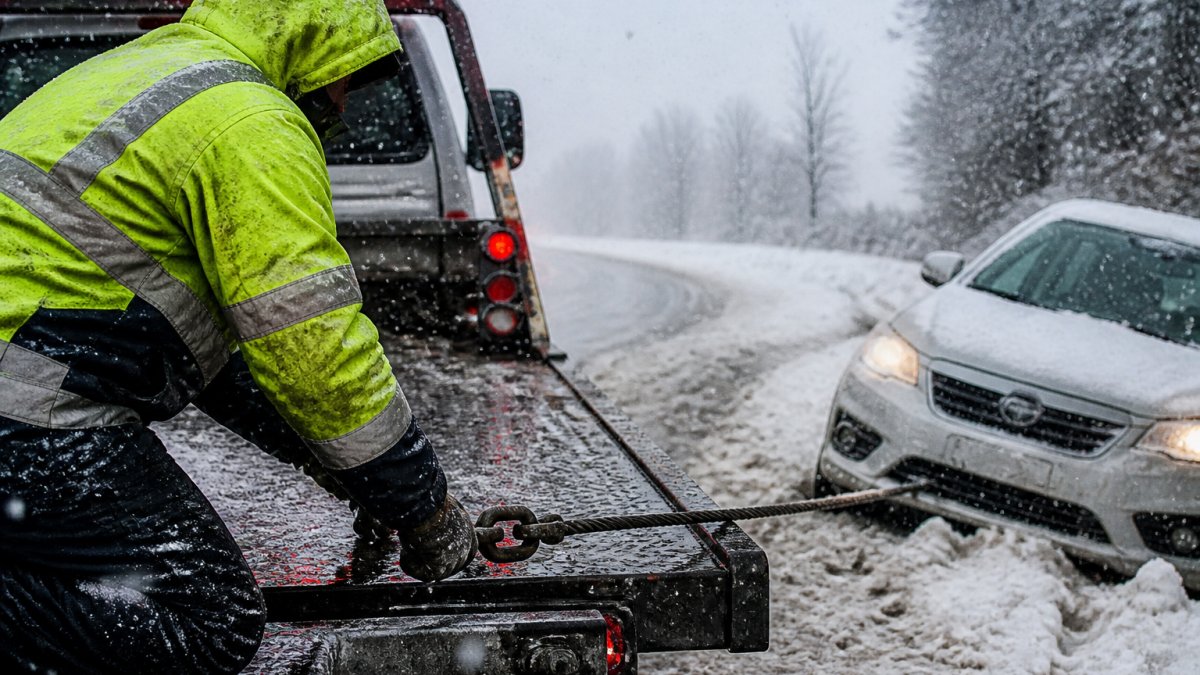
Weather fundamentally changes how a winch-out service in bad weather operates. Snow density varies: wet, heavy snow compacts differently than dry, fluffy snow, and a vehicle stuck in wet snow might require more pulling force. The operator assesses conditions and adjusts accordingly.
Ice reduces traction for both the stuck vehicle and the recovery vehicle, so the operator might need to reposition the tow truck or add anchoring to prevent sliding. Ice also hides hazards like drop-offs or ditches beneath the surface.
Mud in wet conditions is perhaps the most unpredictable. Wet mud acts almost like a suction cup. A vehicle can be held more firmly by mud than by snow. Pulling force requirements can be much higher. Additionally, once the vehicle starts moving, the mud might release suddenly, causing the vehicle to lurch forward faster than expected.
Rain adds visibility problems and makes surfaces more slippery. A recovery operator working in rain has to work more carefully because they can't see as clearly. They also have to account for how rain affects traction and might change their approach mid-recovery if conditions worsen.
Temperature affects recovery timing too. In freezing conditions, a vehicle might be frozen to the ground, literally stuck by ice. This requires different techniques than a vehicle simply mired in snow or mud. Extreme cold also makes equipment more brittle and harder to work with.
When Not to Attempt DIY Recovery in Bad Conditions
Some situations are simply too dangerous for DIY recovery. If your vehicle is on a slope or near a cliff edge, don't attempt to move it yourself. A DIY pull could shift the vehicle in an unexpected direction. Call a professional immediately.
If your vehicle is partially in a ditch, don't try to pull it out alone. You can't see the full situation from inside the car. The vehicle might be balanced precariously, and a DIY pull could flip it. This is exactly the situation that requires professional assessment and equipment.
If you're stuck in moving traffic or on a highway, don't attempt recovery. The risk of being hit by other vehicles is too high. Call for professional help and stay inside your vehicle with hazard lights on.
If your vehicle is stuck in floodwater or water deeper than a few inches, don't attempt recovery. Water changes how vehicles behave. It can sweep vehicles away, hydro-lock engines, or cause electrical damage. Professional operators have equipment designed for water recovery, and they understand the unique risks involved.
If you've already tried to pull yourself out and failed, stop trying. Each failed attempt digs the vehicle deeper or causes additional damage. Call a professional. Continuing to spin wheels or attempt extraction makes the situation worse.
If weather conditions are actively dangerous, heavy snow, ice storms, or severe wind, wait for professional help rather than attempting DIY recovery. Visibility is too poor, conditions are too unstable, and the risk of injury is too high. Professional operators have experience working in these exact conditions.
What Happens During a Professional Winch-Out
When a professional recovery operator arrives, they first assess the situation. They look at where the vehicle is positioned, what it's stuck in, weather conditions, and any hazards. This assessment determines the entire recovery approach. A good operator spends several minutes just looking before attaching any equipment.
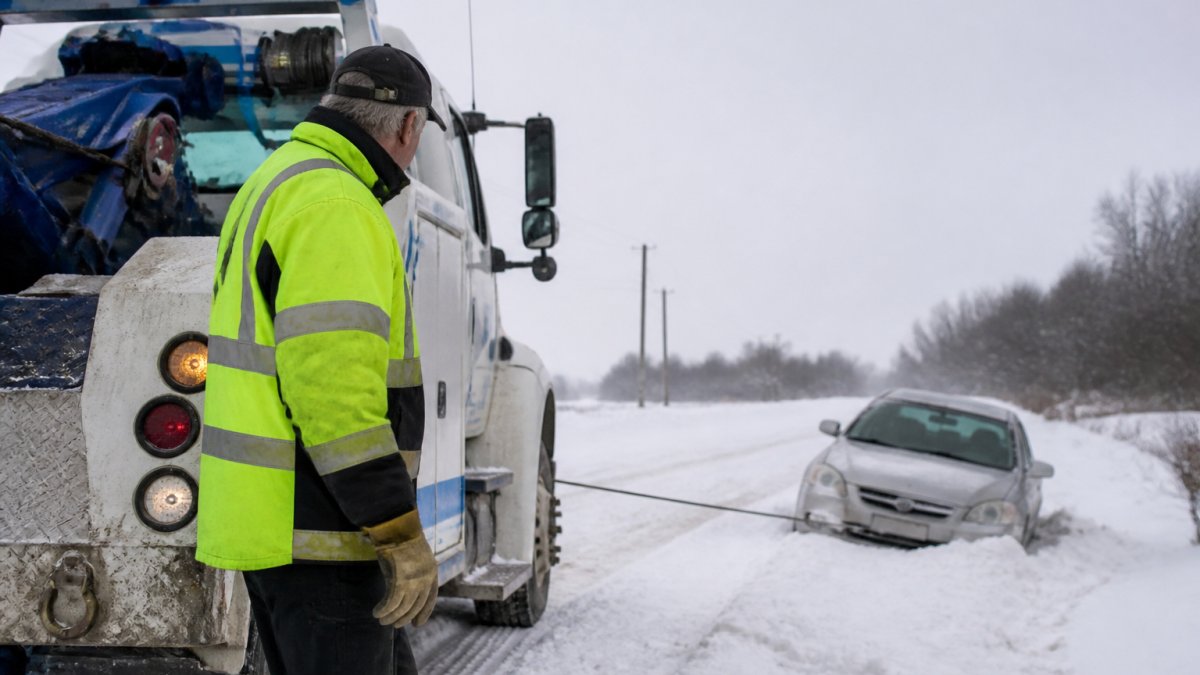
Next, the operator positions the recovery vehicle. This positioning is critical and often takes more time than the actual pull. The recovery vehicle must be stable, have the right angle to the stuck vehicle, and be positioned so the winch cable runs without obstruction.
The operator then attaches the winch cable to the designated recovery point on the stuck vehicle. They ensure the connection is secure and that the cable routing is safe. They check that no people or obstacles are in the path of the cable.
Before applying winch tension, the operator confirms that everyone is in a safe position. They might communicate with the stuck driver via phone or radio. Then they apply winch tension gradually, watching how the vehicle responds.
As the vehicle moves, the operator continues monitoring. They adjust winch speed based on how the vehicle is responding. They watch for signs of damage or problems.
Finally, the operator disconnects the cable, secures the recovery vehicle, and confirms that the stuck vehicle is operational and safe to drive. They might provide information about where to take the vehicle for inspection if damage occurred during recovery.
Getting stuck in bad weather is stressful, but knowing when to call for professional help makes all the difference. A winch-out service in bad weather requires experience, proper equipment, and real-time decision-making that DIY attempts can't match.
When you're stuck, call Kaygold Towing service. We handle winch-outs, snow recovery, mud extraction, and ditch pulls with the equipment and expertise to do it safely. DOT registration requirements for towing services ensure we meet federal safety standards.
Frequently Asked Questions
Can a tow truck winch a vehicle out in snow or ice?
Yes, professional tow operators perform winch-out service in snow and ice regularly, but it requires specialized equipment and technique. The recovery operator assesses surface conditions, identifies solid ground, and uses controlled pull methods to prevent vehicle damage. Slippery surfaces increase recovery time and complexity, which is why 24/7 availability and experienced operators matter, conditions worsen quickly in winter.
What should I do while waiting for a winch-out service in bad weather?
Stay inside your vehicle with the engine running (if safe) and hazard lights on. Keep a safe distance from traffic. If you're on a highway, move to the shoulder if possible. Avoid attempting DIY recovery in slippery conditions, this often worsens vehicle position and increases risk. A professional recovery operator will handle extraction safely.
How does winch cable inspection affect recovery safety?
Winch cable inspection ensures the cable can handle the controlled pull required for safe vehicle extraction. Worn, frayed, or damaged cable increases failure risk during recovery, especially in bad weather when tension is higher. Professional operators inspect cable condition before each service call. Damaged cable can snap under load, creating hazards for the vehicle and operator, proper maintenance is essential for reliable winch-out service.
When is it too dangerous for a tow operator to perform a winch-out?
Extreme conditions like active flooding, severe ice storms, or zero-visibility whiteouts may make winch-out service impossible without safety risk. High water crossing, unstable terrain, or downed power lines also prevent safe recovery. A professional recovery operator will assess these factors and communicate honestly about limitations. Insurance and DOT regulations require operators to prioritize safety, a reputable service will tell you upfront if conditions are too dangerous.