 how-to
What to Do When Your Car Breaks Down: 7 Steps
Table of Contents
- What to Do When Your Car Breaks Down: The First Five Minutes
- What to Do If Your Car Breaks Down on the Highway
- Who to Call When Your Car Breaks Down
- What to Tell a Tow Truck Driver When You Call
- How Long Does Roadside Assistance Take?
- Safety by Road Type, Weather, and Visibility
- Breakdown Kit and Preparedness Checklist
- After the Tow: Insurance, Warranty, and Recovery
- Frequently Asked Questions
Last Updated: October 7, 2026
What to Do When Your Car Breaks Down: The First Five Minutes
A car breaks down when it stops running or becomes unsafe to drive from a mechanical or electrical failure.
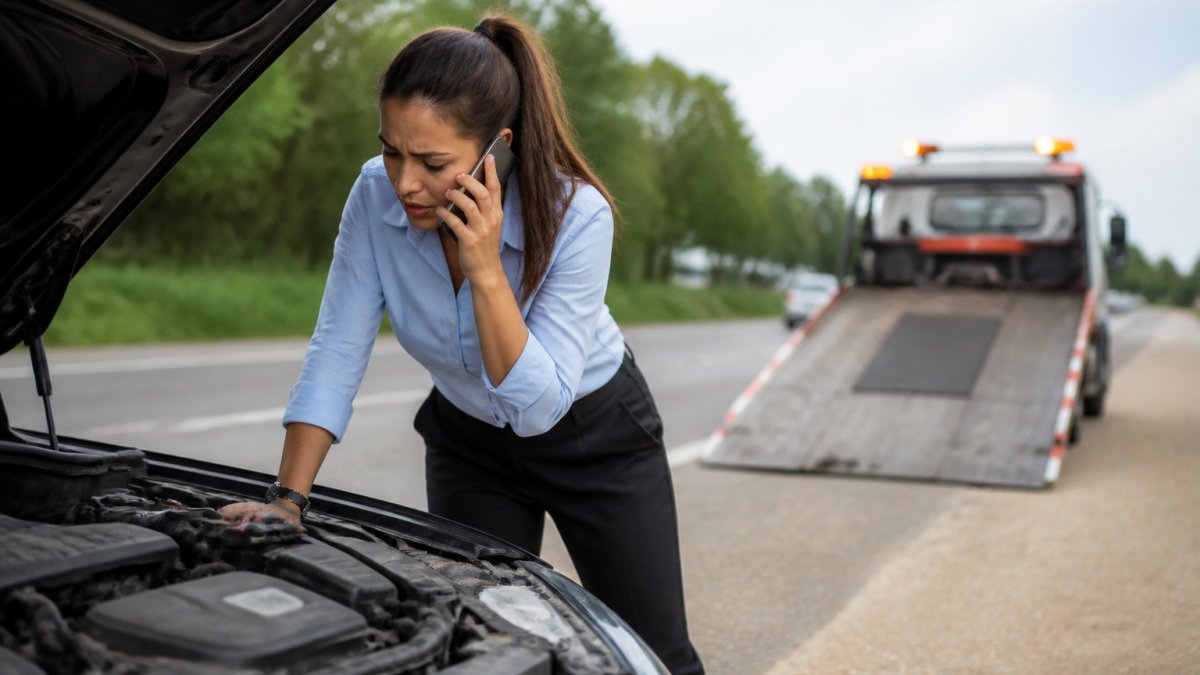
This guide from Kaygold Towing service walks through every stage, from the moment the engine quits to the moment your vehicle is recovered.
Here is the short version: get off the road, get visible, and get help. The order matters.
- Grip the wheel and steer straight. Do not brake hard.
- Turn on your hazard lights right away.
- Move to the shoulder or breakdown lane if the car still rolls.
- Shift into park and set the parking brake.
- Call for help from a safe spot.
- Stay put unless staying is more dangerous than leaving.
That last step is the one most drivers get wrong.
What to Do If Your Car Breaks Down on the Highway
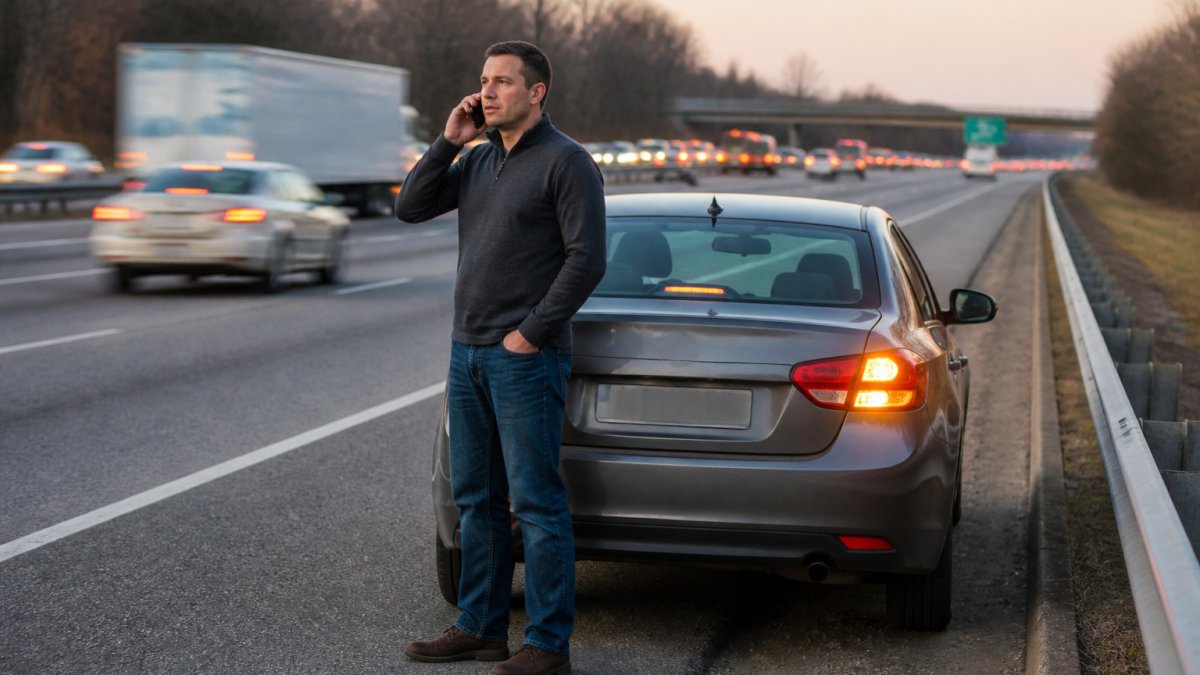
Highway breakdowns are the most dangerous kind because traffic moves fast, sight lines are short, and a stopped car is hard to see until it is close.
Move to the right shoulder if you can. If it is narrow or missing, aim for the next exit or a wide spot past the guardrail.
Once stopped, do these things in order:
- Turn the wheels away from traffic so the car rolls away from the road if it is hit.
- Turn on hazard lights and leave them on.
- Set the parking brake and shift into park.
When to Stay in the Vehicle vs. When to Exit
This is the decision most drivers get wrong, and generic advice to "stay in your car" or "get out of your car" is not enough. Use the conditions below.
Stay buckled inside the vehicle when:
- Traffic is heavy and fast, and there is no barrier or wide shoulder to stand behind.
- You are in a live lane and cannot move the car.
- Weather makes walking risky, snow, ice, heavy rain, or fog with poor visibility.
Exit the vehicle when:
- You can reach a guardrail, barrier, or a spot well off the road, and you can do it on the side facing away from traffic.
- The car is smoking, leaking fuel, or showing any sign of fire.
- You are in a live lane and traffic is closing fast, getting behind a barrier is safer than staying in a struck car.
The rule many experts give drivers: if you cannot get fully clear of the road, stay buckled inside, a car offers more protection than a person on gravel. If you can get fully clear, do it and stay there until help arrives.
Highway, Tunnel, Bridge, and Low-Visibility Adjustments
The safest move changes with the road and the sky. A breakdown on a quiet street is a different problem than one on a dark highway in a storm.
| Condition | Biggest Risk | Best Move |
|---|---|---|
| Highway, clear | Fast traffic, short sight lines | Right shoulder, behind barrier |
| Highway, night | Poor visibility | Hazards on, stay in car if unsure |
| Tunnel | No shoulder, tight space, poor escape | Hazards on, call 911, stay in car if no walkway |
| Bridge | No shoulder, drop-off, fast traffic | Hazards on, stay in car unless a walkway exists |
| Rural road | Long wait, weak signal | Stay in car, share location |
| Snow or ice | Slippery shoulder, plows | Stay in car, keep hazards on |
| Heavy rain | Spray hides your car | Get well off road, stay visible |
| Fog | Reduced sight distance | Hazards on, stay in car, avoid standing in road |
At night, add light if you have it. A flashlight or phone screen helps a driver spot you without you standing in the road. In fog or heavy rain, staying inside with hazards on usually beats standing outside.
Who to Call When Your Car Breaks Down
Call a roadside assistance provider or towing service first for most breakdowns. Call 911 only if you are in a live lane, someone is hurt, or you feel unsafe.
Here is how to sort it out fast:
- 911: injury, fire, live lane, or a safety threat.
- Roadside assistance or a tow service: dead battery, flat tire, lockout, or a car that will not start.
- Your insurer or auto club: if you have a roadside plan through your policy or membership.
When to Call 911 Instead of Roadside Assistance
Most breakdowns are not emergencies, but some are. Call 911 when:
- Your car is stopped in a live lane and traffic is moving fast around you.
- Anyone is injured, or a passenger has a medical condition that needs attention.
- You see smoke, flames, or smell fuel.
When you call 911, give the dispatcher your road name, direction of travel, nearest exit or mile marker, and a landmark. If you are in a live lane, say so first, that changes the response. Stay on the line until the dispatcher says it is okay to hang up.
How to Share Your Location Accurately
Location is the most useful thing you can give anyone on the phone. Use these tools:
- Your phone's map app: drop a pin on your exact spot and text it to the dispatcher or tow driver.
- Mile markers: on highways, these are the fastest way to describe where you are. Note the number and the direction of travel.
- Exit numbers and landmarks: a specific exit, a billboard, a bridge, or a business sign helps a driver find you faster.
If your phone battery is low, share your location first, then call. A dead phone is a bigger problem than a slow tow.
If You Feel Unsafe or Someone Offers Help
Not everyone who stops is trying to help. Trust your instincts.
- Stay in your locked car with the windows up if a stranger approaches and you feel uneasy.
- Do not roll down the window more than a crack to talk.
- If someone is persistent or threatening, call 911 and say you are being approached by a stranger on the roadside.
At Kaygold Towing service, we answer live, day or night. You speak with the same person who shows up, so you get a real ETA.
What to Tell a Tow Truck Driver When You Call
Give the dispatcher five things and you will cut your wait. Location, vehicle, problem, safety, and a callback number.
Say it like this:
- Location: the road name, direction of travel, nearest exit or mile marker, and a landmark.
- Vehicle: make, model, color, and whether it is low-clearance or modified.
- Problem: dead battery, flat tire, no start, or a worrying noise.
- Safety: whether you are in a live lane, on a shoulder, or off the road.
- Contact: a phone number that works and a name.
That last detail about a lowered or luxury car matters. It tells the driver to bring a flatbed instead of a wheel-lift, which protects your suspension and bumper.
Safety Details That Speed Up Your Tow
Small details save time. Tell the driver if your car is in park, if the steering locks, if the wheels are turned, and if the keys are inside. Mention mud, snow, or a steep grade, because those change the equipment needed.
If you are stuck off-road, say so up front. A winch-out is a different job than a flatbed tow, and knowing that before dispatch means one trip instead of two.
How Long Does Roadside Assistance Take?
Most roadside assistance calls take 30 to 60 minutes to arrive, depending on traffic, weather, and how far the driver has to travel.
Several things push that number up:
- Rush hour traffic
- Snow, ice, or heavy rain
- A remote or off-road location
The Federal Highway Administration data on traffic congestion shows how much delay congestion adds to any trip, which is why we give honest windows instead of a fake "10 minutes."
Safety by Road Type, Weather, and Visibility
The safest move changes with the road and the sky. A breakdown on a quiet street is a different problem than one on a dark highway in a storm.
| Condition | Biggest Risk | Best Move |
|---|---|---|
| Highway, clear | Fast traffic, short sight lines | Right shoulder, behind barrier |
| Highway, night | Poor visibility | Hazards on, stay in car if unsure |
| Rural road | Long wait, weak signal | Stay in car, share location |
| Snow or ice | Slippery shoulder, plows | Stay in car, keep hazards on |
| Heavy rain | Spray hides your car | Get well off road, stay visible |
| Tunnel or bridge | No shoulder, tight space | Hazards on, call 911 |
At night, add light if you have it. A flashlight or phone screen helps a driver spot you without you standing in the road. In fog or heavy rain, staying inside with hazards on usually beats standing outside.
Breakdown Kit and Preparedness Checklist
A small kit turns a scary breakdown into an inconvenience. Keep it in the trunk and check it twice a year.
- Jumper cables or a jump starter pack
- Flashlight with fresh batteries
- Reflective triangles or road flares
Also keep your maintenance current. Regular oil changes, battery checks, and tire pressure checks prevent many breakdowns.
After the Tow: Insurance, Warranty, and Recovery
Where your car goes next depends on who pays. Your insurance, your warranty, or your roadside plan may cover part or all of the tow.
Ask these questions before the truck leaves:
- Does my policy or warranty cover towing, and up to how far?
- Which shop should the car go to for warranty work?
- Do I need to file a claim, and by when?
Keep the tow receipt and the driver's paperwork. If you have a fleet, log the breakdown to spot repeat problems across vehicles.
If you are not sure where the car should go, send it to a shop you trust.
Frequently Asked Questions
Should I stay in my car or get out if it breaks down?
Stay inside with your seatbelt on if you're on a highway or busy road. Exit only when you can safely reach a guardrail, sidewalk, or area well away from traffic, and use the passenger door if the driver's side faces moving vehicles. If you must stand outside, move behind the barrier, never between your car and oncoming traffic. On quiet streets with clear visibility, stepping out to set warning triangles is reasonable.
Who should I call when my car breaks down?
Call a towing or roadside assistance provider first for dead batteries, flat tires, lockouts, or a car that won't start. Call 911 only if you're in a dangerous position, blocking traffic, or someone is injured. If you have insurance or a warranty with roadside coverage, call that number instead, since it may cover the service. Keep your provider's number saved in your phone before you need it.
What information should I give roadside assistance when I call?
Give your exact location first, including the road name, direction of travel, nearest exit or mile marker, and any landmarks. Then describe the vehicle: make, model, color, and whether it's low-clearance. Explain the problem, such as a dead battery or flat tire, and mention if you're in a travel lane, on a shoulder, or off the road. Accurate details help the driver arrive faster with the right equipment.
How long does roadside assistance take to arrive?
Wait times depend on your location, traffic, and how many calls the provider is handling. Urban areas often see arrivals within 30 to 60 minutes, while rural stretches can take longer. Owner-operated services with a single truck can give direct ETAs because the person answering the phone is often the one driving to you. Ask for a time estimate when you call and request a callback if it changes.
A breakdown can wreck your whole day if you are stuck waiting on a dispatch queue with no real answer. Kaygold Towing service is owner-operated, so you talk to the same person who arrives, with honest ETAs and no subcontractors. We run 24/7/365, we are DOT registered and fully insured, and we bring flatbed transport for low-clearance and luxury vehicles plus winch-outs for mud and snow. Get started with Kaygold Towing service and get off the shoulder fast.